Wednesday, February 22, 2012

Travel and inspiration

On Monday I returned from a 9 day road trip, most of which I spent with family in Tennessee. What a whirlwind! Actually, I enjoy long driving trips on my own, partly for the opportunity to listen to books on CD (this time it was Michelle Cooper's A Brief History of Montmaray), but also to do a little plotting on my own stories as I zip along the interstate.

Two encounters during my visit inspired a flurry of interstate plottings on the return trip:

1) When I told my dad about the characters and setting for a new story, he remarked that my main character would have been born about the same time as his mother -- my dear 94-year-old grandmother, Ruby. That prompted me to ask Grandmother if she once again would share her photograph albums with me. (Looking at Grandmother's photos has been a favorite activity of mine since early childhood.)

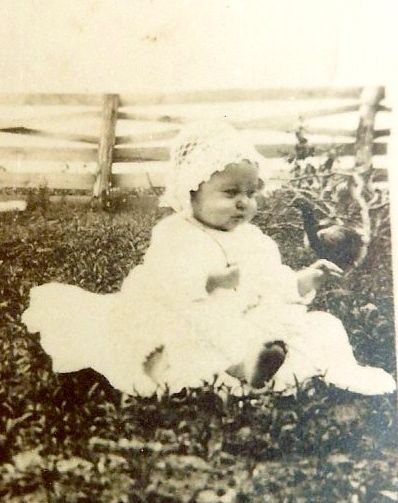
Fortunately, Great-grandfather Tippit was an avid photographer, so there are many photos of my grandmother as a baby, child and teenager. Here is one of my favorites:


Grandmother Ruby stands at the right with her sisters Dorothy (middle) and Mildred (left). Aren't they charming? And check this out: a photo of Grandmother as a wee baby!

Lucky for me, my grandmother wrote (& self-published) her memoir several years ago, so I have easy access to details of her life growing up in the 30s. In fact, I am incredibly fortunate that both my grandmothers took the time to set down their memories in writing -- not only does it help me understand them and feel closer to them, but they've provided lots of material for me to mine for stories! (In a respectful way, of course.)

2) When I visited my mom in Indian Mound, TN, I stayed at the Lylewood Inn Bed & Breakfast. Partly this was because my old bedroom in Mom's attic is currently full of boxes and furniture, but mostly I wanted to check out this old house in order to flesh out yet another story idea.


The house you see here was built in 1892 on the foundations of an antebellum log house that burned to the ground in 1890. It perches on a hill above the Cumberland River, proud and lovely. You can almost see it preening, can't you? It's hard to believe I never knew this house existed until a few years ago. I grew up only 25 minutes away!

It was fun to listen to the owner as she shared stories of this house and the one that stood before it, mostly because all the while I was plotting an entirely different past and present for the house.

I hope one day you'll see each of these stories on a library or bookstore shelf. Cross your fingers!

Monday, February 6, 2012

Movie Monday: The Artist


For months everyone has raved and raved about The Artist. And I waited and waited for it to come to OKC theaters. Finally it arrived! Could it possibly live up to the hype?

YES!

Steve and I saw it Saturday evening, and the theater was packed. This is mostly a blessing (we'll never get Indie films if no goes to them), but I was afraid it might end up a curse. I was annoyed by all the rattling of popcorn bags and tearing of candy wrappers -- I'm accustomed to going to early shows with smaller and less munchy crowds -- but within five minutes of the movie starting, all that noise stopped. Everyone was entranced. The only sound from the audience after that was when an older lady cried "What did he say? What did he say?" after a crucial scene. (Those of you who have seen the movie probably know EXACTLY when that question was asked.)

If you're a film history buff, a fan of Singing in the Rain, or always wished A Star is Born hadn't been quite so dark, you'll love this film. If you hate B&W, get bored and wiggly during silent films, or if your heart is two sizes too small, don't bother. (Heh.)

Two review blurbs I loved:
[The Artist is] a project so idiosyncratic, so unlikely, so simultaneously innocent and sophisticated that it could only have been devised by the French. (Read the entire Salon.com review.)

In the end, that is the tragedy "The Artist" is really exploring, the death and extinction of a medium that brought the world together, that everyone could experience in the same way, never from the outside, never as a stranger. With delicacy and originality, it laments what went away. But it also performs a resurrection, because in Dujardin's performance we discover something extraordinary and lovely, the first truly great silent film performance in about 80 years. (This San Francisco Chronicle review made me cry a little.)

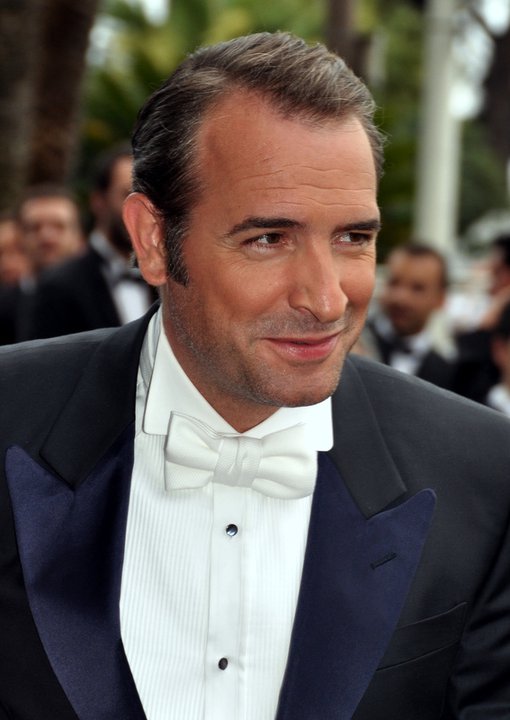
I have fallen deeply in love with this film, with Jean Dujardin and the rest of the cast, with sweet Uggie, and with the people who made this dream into a reality. Can't wait to see it again!

[Cross-posted from Livejournal]

Friday, February 3, 2012

Friday Favorite: SCBWI

It's taken me days to recover, but I'm finally here to tell you I had a great time at NYSCBWI last weekend.


Got to hang out with agent Jenn and some of her super cool clients, including Ward Jenkins (seen above), Kristen Kittscher and Mara Rockliff -- kindred spirits, to be sure!

Other highlights:

-- enjoying tea with my editor at the Morgan Library and Museum (love that place!).

-- hanging out with the illustrious Maddee James of xuni.com.

-- meeting new friends and catching up with old ones. (Thanks for being my Saturday buddy, Maurissa Guibord!)

-- learning revision techniques from Cheryl Klein. (Just go ahead and buy her book, you guys.)--(Oh, and check out Maurissa's post on this.)

-- coming to the realization that I should think of my career more in terms of the long haul. It's easy to fixate on what I want NOW, but what about my entire writing career? What would that look like? Am pondering this.

Have a grand weekend, everyone!

[Cross-posted from Livejournal]

Monday, January 23, 2012

ALA Midwinter 2012

ALA Midwinter was in Dallas this past weekend (actually, it's still going on -- they'll announce award winners today). With it being so close I couldn't pass up the opportunity to check things out. Fortunately Random House was willing to get me a badge. (Thanks, RH!)

The Exhibits Hall was pretty overwhelming. I'm not sure if it's my introversion, or a mild sort of agoraphobia, but after an hour in there I was ready to freak out. Everyone I encountered was very nice, and it wasn't even that crowded. Nevertheless, I found myself getting cranky pretty quickly, and I could not find any space inside the hall to just sit and catch my breath. Fortunately there was a Starbucks with its own little seating area just outside the hall. After chilling out for while in the order line and then grabbing a seat to myself, I began to feel better.

I now know that you can't do one pass and be done with the Exhibits. They bring out more ARCs and goodies as the day goes on. Therefore it's necessary to take a break, regroup, and attack again! (And maybe bring a rolling suitcase for all the ARCs?)

I was only there a few hours. I hardly scratched the surface of all ALA Midwinter has to offer, as you will see in the following photos:


My first stop was the Random House booth. I was very tickled to see The Revenant on display, particularly because it's an "older" title now. And once again I was shelved near fellow Elevensie Tessa Gratton's Blood Magic -- yay! On my second pass to the RH booth I chatted with the very busy Alex Bracken, who is an accomplished author and works in School & Library Marketing at Random House. Thanks, Alex, for picking out some ARCs for me!


After my mild freakout, it was so nice to run into the Texas Sweethearts. I chatted with Jessica Lee Anderson and PJ Hoover. Also got to catch up with Jenny Moss. Later I went to Jessica's signing at the PGW booth (as seen above in a frustratingly blurry photo). What a lovely lady she is!


After lunching with my husband, I met up with Sweethearts again at their afternoon reception. Their booth was quite busy! You should be able to spot Jo Whittemore, Jeanette Larson, PJ Hoover and Jessica Lee Anderson in there. (I sort of stalked them, as you can see. It was just so nice to see familiar faces.)


And I finally got to hang out with agent sister Jo Whittemore! She kindly signed her book for me.


This was my modest haul of ARCs and finished copies. Anyone up for a giveaway or two? :)

[Cross-posted from Livejournal]

Friday, January 20, 2012

Make it a scene

Maggie Stiefvater recently dissected a chapter of THE SCORPIO RACES on her blog, and it was so detailed and helpful that readers clamored for more. Maggie, being a helpful soul, invited other writers to go through the same process with a chapter of their own, and I was honored to be included. As a former teacher and someone who loves to do school visits, I'm always eager to put something together that I could share on my blog and explore in more detail with teens in a classroom setting.

AND YET . . .

I stand before you quite nervous because, you guys! I only have one book published. I'm very new at this and still have much to learn.

So I'm going to be a wee bit rebellious and change the format. Rather than dissect one chapter, I'm going to look at two passages, comparing the first editorial draft to the published version in order to show how expanding a piece of exposition into a scene can help transform your spindly armature of a draft into the sculpture you had in mind.

What am I talking about? Let me give you some context: I was fortunate to have the opportunity to hear Karen Cushman speak at an SCBWI event. I was particularly heartened by a metaphor she used for her writing, one in which she characterized her first draft as a sculptor's armature and her subsequent revision as a process of layering words and scenes like clay. (Omigosh, if you need a visual you can see the whole process from armature to finished project in this blog post!) I've always been an underwriter -- my first drafts are very spare and require much fleshing out. So today I'm going to share two sections of The Revenant that I expanded (and hopefully improved) by turning spare exposition into "fleshier" scenes.

From Chapter 3, editorial draft:
I kept to my room as much as possible, reviewing the texts that Miss Crenshaw had provided for me. I'd thought to be teaching basic skills to rough Indian girls, but as I pored over McGuffey's Sixth Ecelectic Reader and Swinton's Studies in English Literature, I knew a battle lay in wait. This was no charity school full of girls grateful for instruction in proper speech and manners. This was an institution of higher learning, and the students thought too highly of themselves to be grateful for anything I had to offer. The part I played had become more challenging, but there was no turning back.

The morning bell was to ring at 5:30 on Wednesday, but I woke hours before dawn.


One of the things my editor pointed out from the start of our revision process was that I needed to develop the relationship between Willie and her colleague Olivia (who plays a role in solving the murder mystery) AND show in more vivid detail just how Willie's struggles with her teacherly duties. (She is, after all, a 17-year-old who is impersonating a teacher.)

In my very low-tech scans below (sorry!), start with the second paragraph:

[click images to enlarge]

Chapter 3, final draft:


As you can see, I bridged the paragraph about Willie's anxiety with the paragraph about the first day of classes (two bits of narrative summary) by including a scene that:

1) helps characterize Olivia (she well remembers the first day jitters, is excited to have another new teacher at the school, and is a giving rather than competitive person -- willing to share survival tips and encouragement)
2) depicts the blossoming friendship between Olivia and Willie
3) shows Willie's uneasiness (through her "Yellow Wallpaper" moment, heh), and . . .
4) reinforces the theme of theatricality that runs throughout the book (Willie, the daughter of an actor who is herself pretending to be someone else, connects to Olivia through the idea of teacherly authority as "performance")

I only could have written this scene, small and quiet as it is, after having written many drafts of the entire manuscript. My editor wanted to develop Willie's friendship with Olivia, but that meant I had to get to know Olivia better myself. Although I bristled a bit when first confronted with this idea, I now know full well that Olivia started out as a plot device -- mostly just a convenient sounding board for Willie. That's why she, in the original draft, disappears for 100 pages while Willie engages in all the interesting things. (How did this book ever sell?) Thinking about what to add to flesh Olivia out helped me to understand her better and subsequently to write scenes that convey how her friendship is a driving force behind Willie's growth.

And now to a later scene . . .

From Chapter 13, editorial draft:
I'd looked froward to going to Olivia's house at the end of term and shedding the role of "Miss McClure, seminary teacher" to just be Willie, a girl visiting her friend. Anyone as sweet as Olivia must have cheerful parents, and I was curious to spend time with a proper family, one in which everyone laughed and teased and scolded out of love.

I relied on this visit to help me put Mr. Sevenstar from my mind. I welcomed any distraction that could keep me from reliving the conversation at the Bell home, for I wearied of tearing his sentences apart and examining each word as though it were a specimen under a microscope. It was a fruitless endeavor.

But in the end I had to decline the offer. Not by choice, but because Miss Crenshaw called me into her office and commanded I stay at the seminary to get my grade book in order.


That third paragraph is just screaming for a scene, isn't it? Maybe I avoided it at first because I was so eager to get to the paranormal shenanigans that lay ahead, but once my editor made the point that I didn't show Willie struggling enough with her teaching duties, this seemed the perfect place to take a really inert piece of exposition and bring it to life through a scene.

Chapter 13, final draft:


It's not a long scene. It's probably not anyone's favorite scene. But in two pages I turned "Miss Crenshaw called me into her office and commanded I stay" into an actual confrontation in which Willie is chastised about her failings and made to sweat over them a bit. There's a nice tension -- we want Willie to have a holiday with her bestie Olivia, but she's NOT DOING HER WORK. She can't get away with that! So while we (the reader) sympathize with her sense of outrage, we'd probably feel betrayed if she continued to get away with cheating her way through teaching.

This scene is also a nice bookend to a later scene -- another confrontation between Wilie and Miss Crenshaw in Crenshaw's office -- in which the principal is absolutely deflated by a schocking revelation and Willie sees, for the first time, that this scary old crow of a woman is quite human and vulnerable. (*sniffle*)

Concluding thoughts:
If you are an underwriter like me, it might help to search out those inert bits of exposition and decide which ones could do more work for you as a scene. Think about how long that scene should be (for instance, the above scene between Willie and Miss Crenshaw needs to be short and snappy, don't you think?). How much can be usefully/effectively conveyed? If the scene bogs down or doesn't convey anything useful or new -- if it's just there to be pretty or clever -- maybe it needs to stay in the form of narrative summary.

Anyone else have tips on how to choose between exposition and scene? (I know exposition has become a bad word, but can you avoid it entirely?) If you are more of an overwriter (as in, you create a huge chunk of clay and then have to whittle it down), how do you decide which scenes MUST stay and which should be collapsed into narrative summary or cut altogether? Any examples? I'd love to hear from you.

[Cross-posted from Livejournal]